Cranleigh Barton, Queen Mother
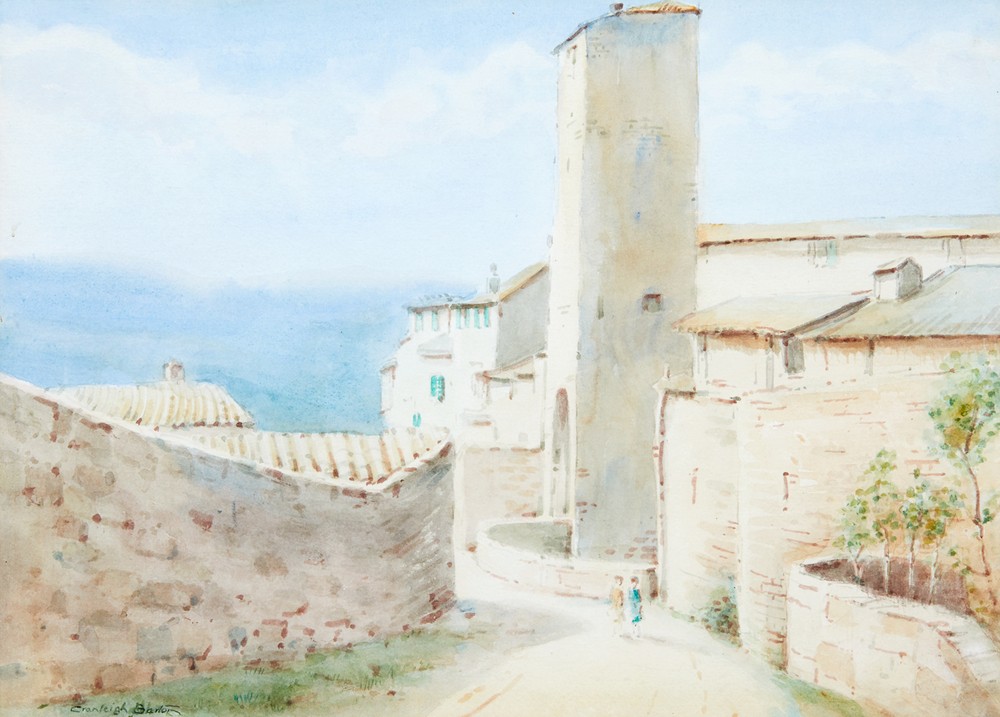
Cranleigh Barton was born in Feilding in 1890 and worked as a young lawyer in Whanganui before travelling the world. He made a living from his canny investments and by painting watercolours: landscapes, street scenes and grand buildings. Cranleigh was discreetly homosexual, a fact he alluded to in his diaries. He sailed for England in 1913, disembarked at the stopover in Colombo, and happily wrote that ‘the men are all so well made, they seem just a mass of muscle’. (On another trip, in 1924, he described his rickshaw driver as a 'stallion').
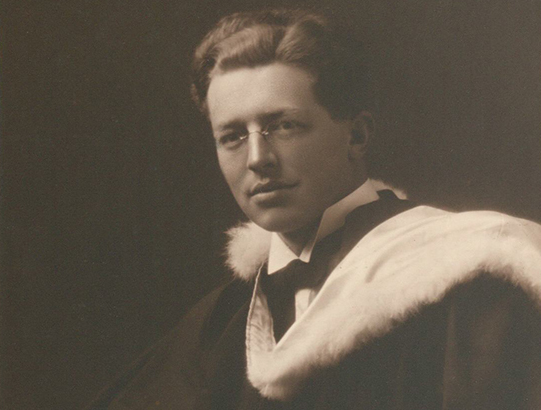
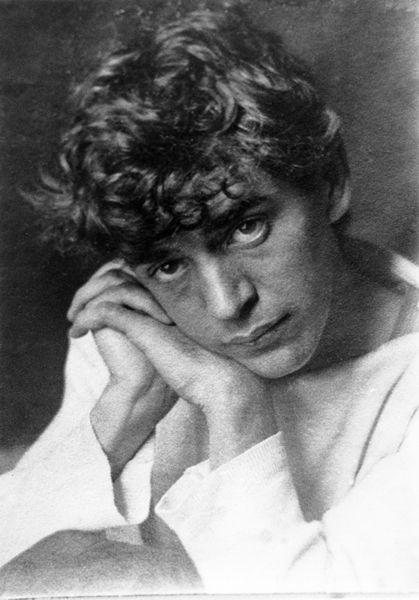
Above: Cranleigh Barton's university graduation photo, 1915. Below: A Barton watercolour of Tuscany.
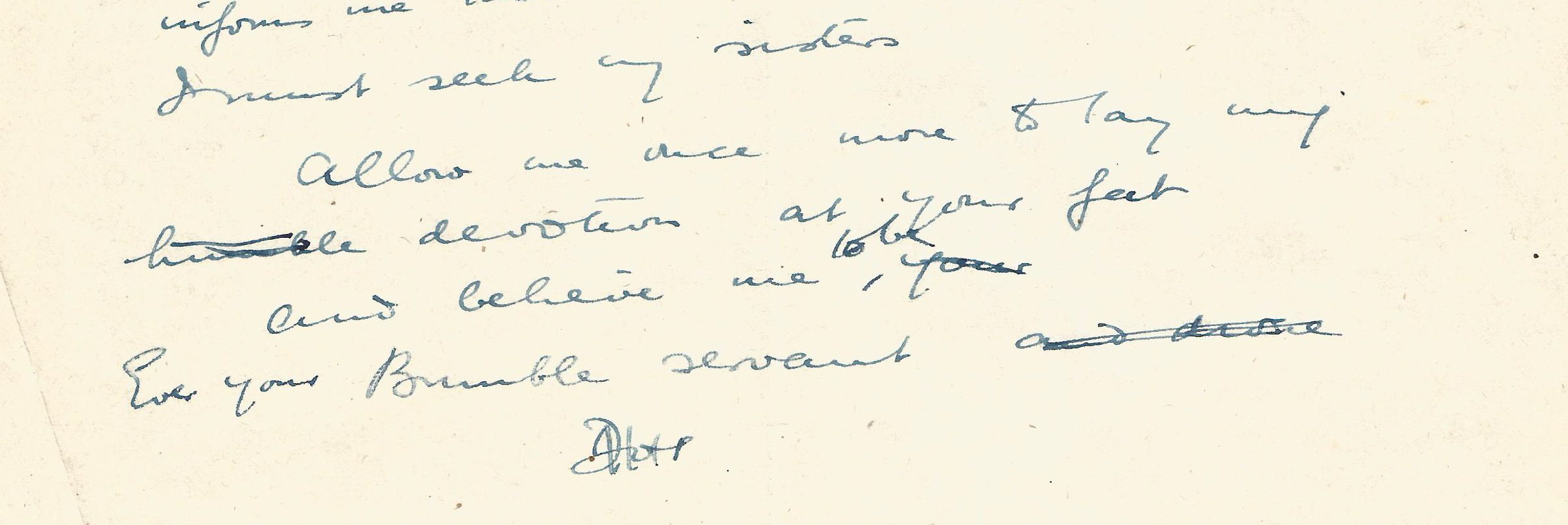
One of his friends lived in the rural settlement of Okoia, near Whanganui, and in about 1915 he wrote a flamboyant letter to Cranleigh. Reproduced in full below, its homoeroticism is (only partially) obscured by a honey bee metaphor. The unknown friend addresses Cranleigh as the ‘the all Gigantic and Majestic Queen Mother of the Apiary’. On one occasion he ‘was able to express the emotions which surged within me by kissing (as you mortals call it) your left ankle’. The following encounter was more intense. ‘I slipped within your veil and was for a few blissful moments able to indulge in intimate osculations’ [kisses], then ‘I droned in your ear an ode or hymn I had composed that morning in your honour’. According to the letter, Cranleigh reciprocated these ‘amorous attentions’. The friend wrote, suggestively, ‘you endeavoured to embrace me with your hand at the same time ejaculating a word of one syllable in a very expressive tone’.
While this man’s identity has been lost to history, we know Cranleigh had other queer companions. In 1914, returning by ship from his initial visit to England, he met Christchurch-born poet D’Arcy Cresswell. Cranleigh nicknamed him ‘Pussy’. The men stayed on friendly terms. Six years later, D’Arcy blackmailed Whanganui mayor Charles Mackay, using the public official's homosexuality as a weapon [see here and here]. This was deeply hypocritical. D’Arcy was an ‘eccentric nonconformist’, as politician Ormond Wilson put it, and his later autobiographical writings ‘extolled homosexual love’. Cranleigh also knew Charles Mackay and, in 1919, spent a day with him at a Christchurch beach. Cranleigh thought the mayor a ‘curious’ man, but he ‘was very amusing and had a large fund of stories’.
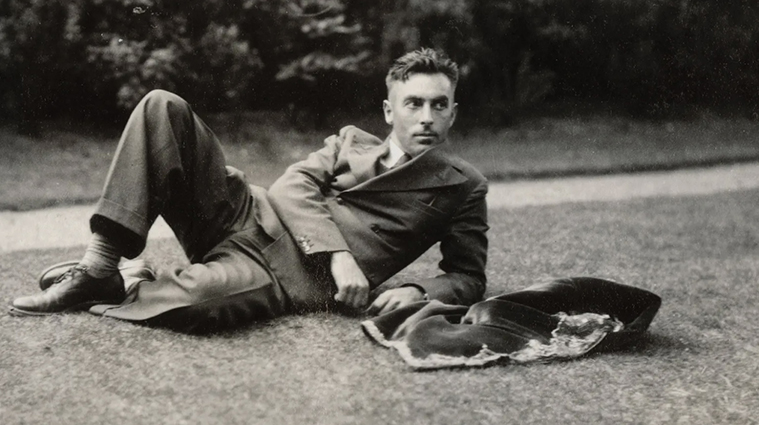
'Pussy' Cresswell. See images of Charles Mackay here.
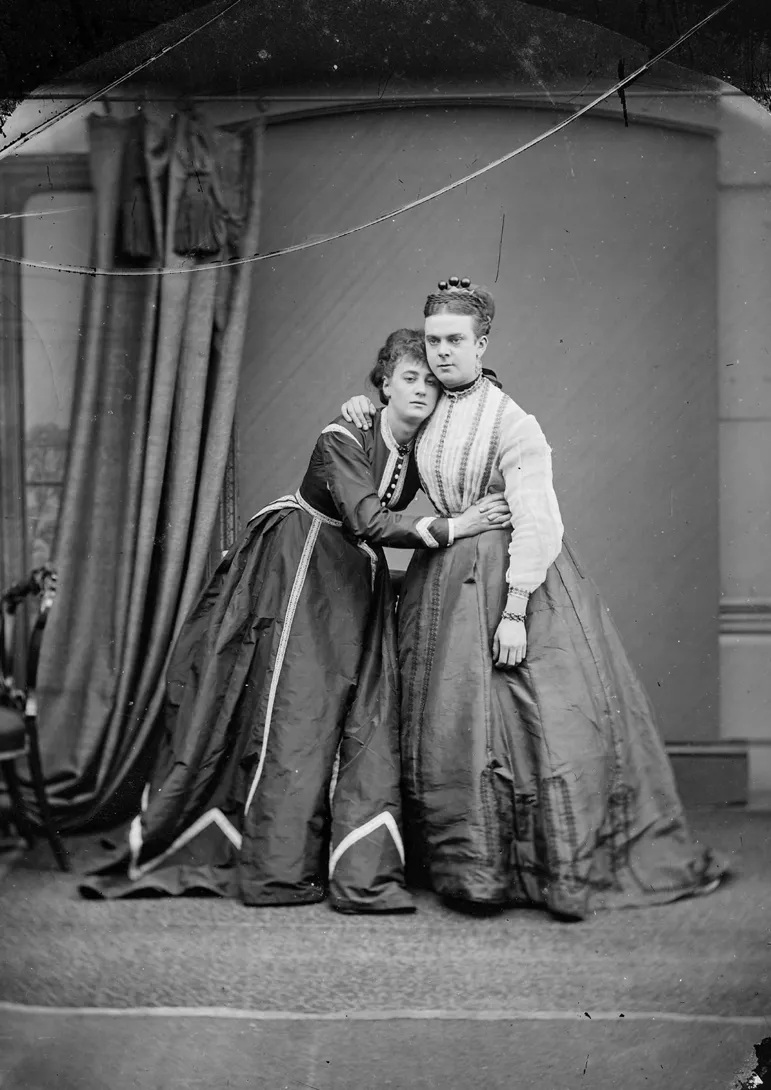
The obvious campness of the Okoia letter draws us in to a wider queer world. Camp sensibilities made an appearance in the infamous 1870 trial of Frederick Park (‘Fanny’) and Ernest Bolton (‘Stella’), a cross-dressing duo who picked up men in London’s streets and theatres [see here and here]. They wrote florid letters to their friends, and Park described his own ‘campish undertakings’. He signed his correspondence ‘Good bye dear’ and ‘Ever yr affectionate Fanny’. Back in New Zealand, camp themes wove through the photography of Wairarapa chemist Robert Gant whose pictures took an especially flamboyant turn during the 1910s [see here and here].
 |
 |
Above left: Ernest Boulton (left) and Ernest Park (right). Above right: Charlie Haigh, Robert Gant's lover, c1910.
Cranleigh’s friend’s letter, with its arch humour and references to queens, devotion and ‘seeking sisters’, nestles into this context. So does the reference to taking up one's hind legs, and even the mention of 'seeing your majestic person'. (At the time, 'person' was a common word for penis). Currently in a private collection, the letter offers a tantalising addition to what we already know about homoerotic New Zealand cultures during the 1910s.
***
The Apiary, Okoia, Sunshine – The Clover Season
To the all Gigantic and Majestic Queen Mother of the Apiary,
May it Please Your Majesty,
It is with considerable trepidation and a flutter of wings that I take up my hind legs to make this address to you conveying my unfailing affection and loyalty.
Doubtless it will be a matter of surprise to you that I am able to give expression to my thoughts by a means which are intelligible to your august intellect, but pray accept my assurance that the inventions which have led to this happy result and the complicated scientific apparatus employed would render pale in comparison the feats of mortals such as Edison and Marconi. Time will not permit me even to indicate the rudimentary principles of the forces utilised, nor indeed would it be easy for me to translate into your tongue the many trying technical terms which would be necessarily involved.
Therefore I will proceed at once with matters which to me at least are of much more moment – and I trust they will prove so to you.
It might be vain fancy but I think on several occasions I have attracted your august attention to my insignificant person and I shall endeavour to recall these instances to your memory. The first occurred about three weeks ago when I had the privilege of seeing your majestic person for the first time. On that occasion I was able to express the emotions which surged within me by kissing (as you mortals call it) your left ankle. The second opportunity came a few days later when I slipped within your veil and was for a few blissful moments able to indulge in intimate osculations. It was on that occasion too that I droned in your ear an ode or hymn I had composed that morning in your honour until overwhelming numbers of my brothers and sisters who are lacking in musical perception forced me to desist (with dire threats).
That my amorous attentions were in some measure reciprocated I feel can safely gather from your behaviour on each of these occasions. You endeavoured to embrace me with your hand at the same time ejaculating a word of one syllable in a very expressive tone. I have searched my English-Bee dictionary from cover to cover but have been unable to find the word which I can now joyously conclude was a pet term of endearment.
Many things would I express to you but by so doing I should be trespassing on your valuable time and moreover a certain sinking sensation informs me that it time for feeding and I must seek my sisters.
Allow me once more to lay my devotion at your feet and believe me to be ever your Bumble servant.
***
Sources
Barton, G. Abroad: The Travel Journals and Paintings of Cranleigh Harper Barton, pp.6; 45.
Barton, G. Email correspondence with Chris Brickell, 2025-6.
Brickell, C. Manly Affections: The Photographs of Robert Gant, 1885-1915.
Brickell, C. Mates and Lovers, p.109.
Diamond, P. Downfall: The Destruction of Charles Mackay, p.148.
McKenna, N. Fanny and Stella: The Young Men Who Shocked Victorian England, p.165.
Wilson, O. An Outsider Looks Back, pp.38-9.